Daily Fashion Arabia in conversation with Sara Jayyusi and Omar Daylaq, founders of Deerah.
Article and Graphic Design: Rania Abdalla
Images by Deerah
Images by Deerah
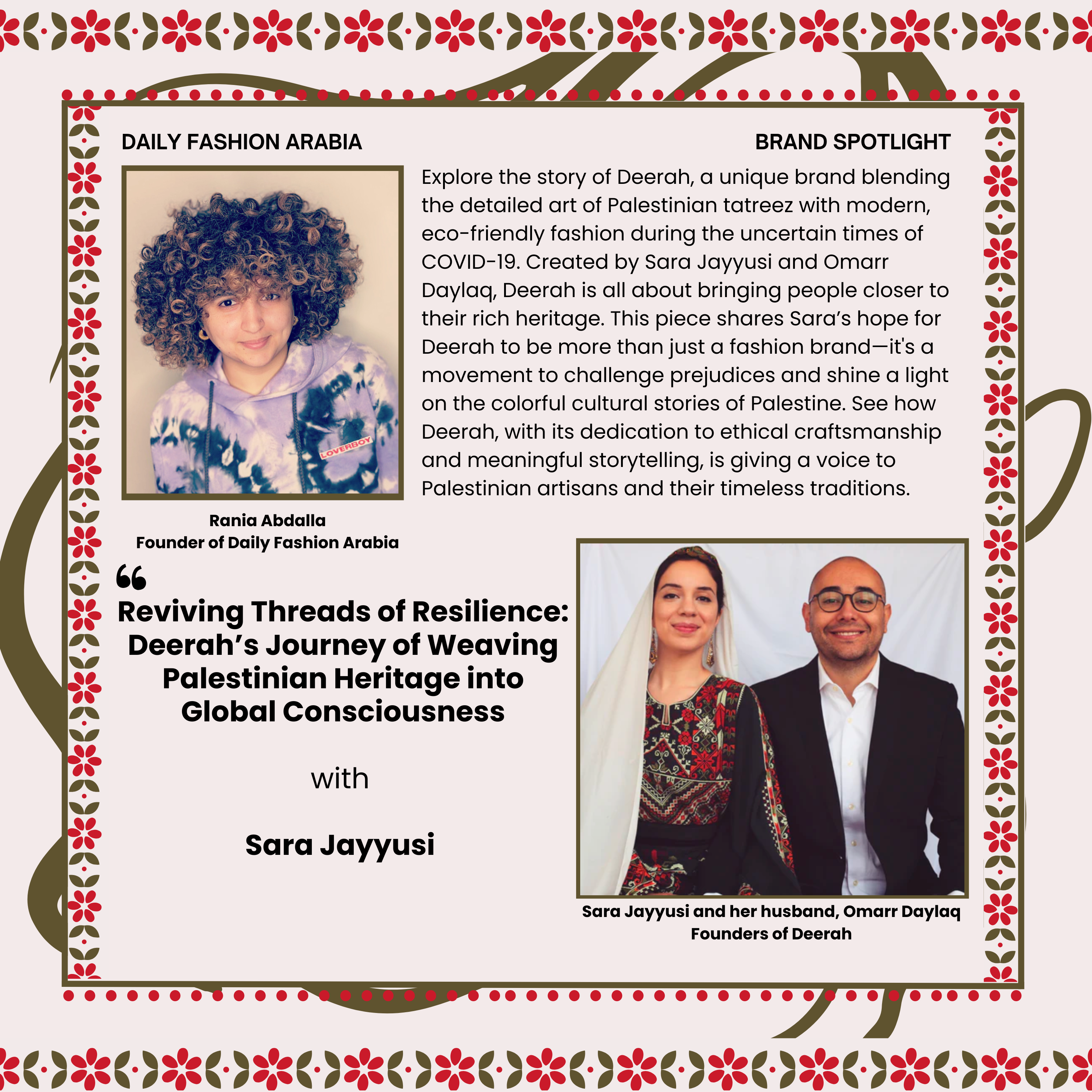
Stitching Resilience: How Deerah Weaves Palestinian Heritage into Modern Threads
When the pandemic brought the world to a standstill, Sara Jayyusi and her husband, Omarr Daylaq, were caught in the middle of a major life transition. They had been moving from Saudi Arabia to Canada but suddenly found themselves stuck in Jordan after borders closed.
What could have been a period of frustration became the start of something meaningful. With time on their hands and a clear gap in the market, they created Deerah, an e commerce platform focused on preserving and promoting Palestinian embroidery, known as tatreez.
“We had nothing but time. And we saw that Palestinians in North America were disconnected from their cultural pieces because travel had stopped,” Jayyusi said. “We decided we could become that bridge.”
Deerah started with only a few hundred dollars and machine embroidered items. What the pieces lacked in hand stitching, they made up for in cultural meaning. From the beginning, the goal was greater than commerce. It was about reclaiming and celebrating a heritage that had often been dismissed and marginalized.
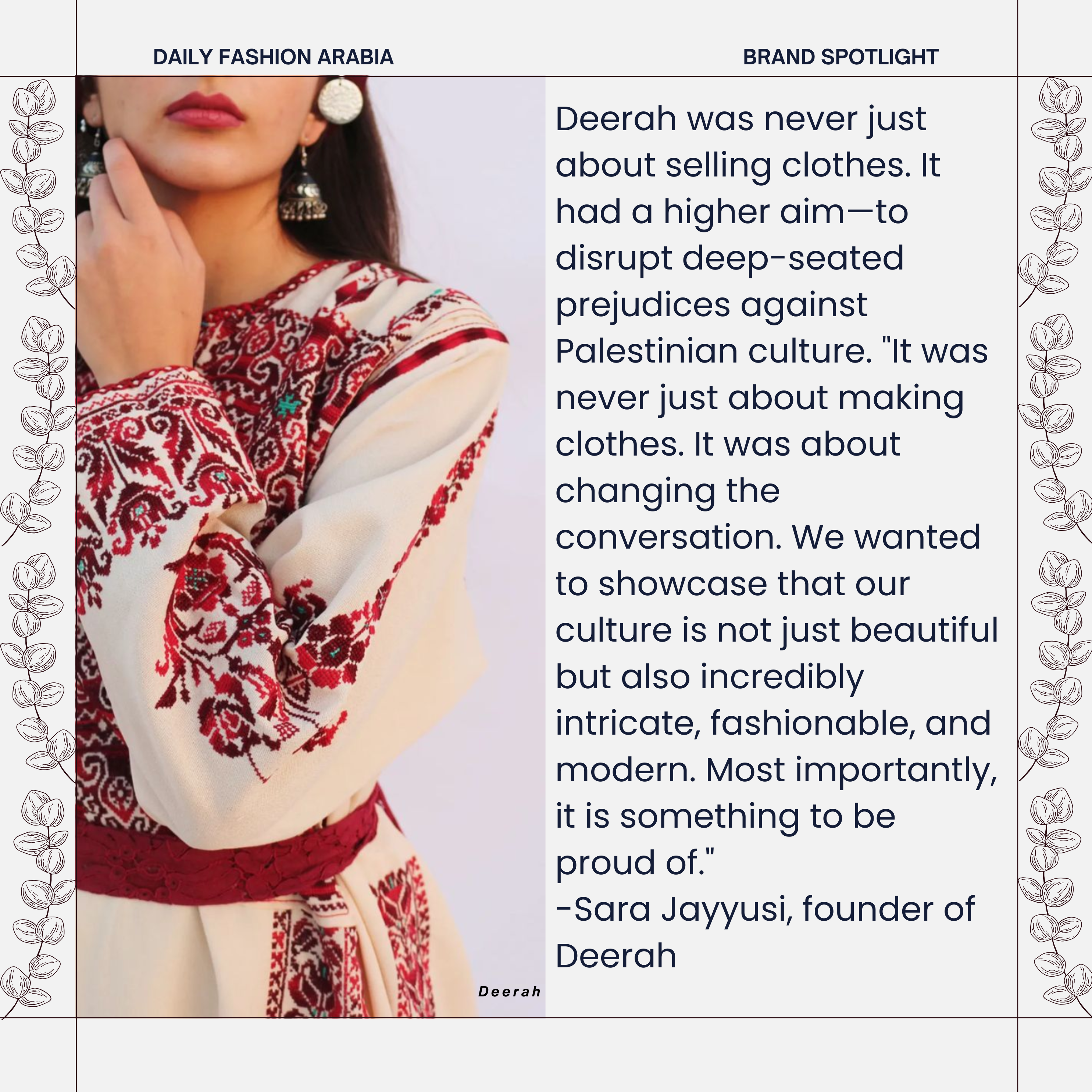
“One of the tactics used against us was cultural marginalization. Our heritage was labeled as backwards. We wanted to change that by showing the beauty, detail and relevance of tatreez,” she said.
Today, every hand stitched Deerah garment carries a story that connects heritage with modern style. Tatreez is not a relic of the past. It is a living art form shaped by resilience, pride and identity.
Deerah's Ethical Shift: Inside the Refugee Camps Where Tatreez Survives A Visit That Changed Everything
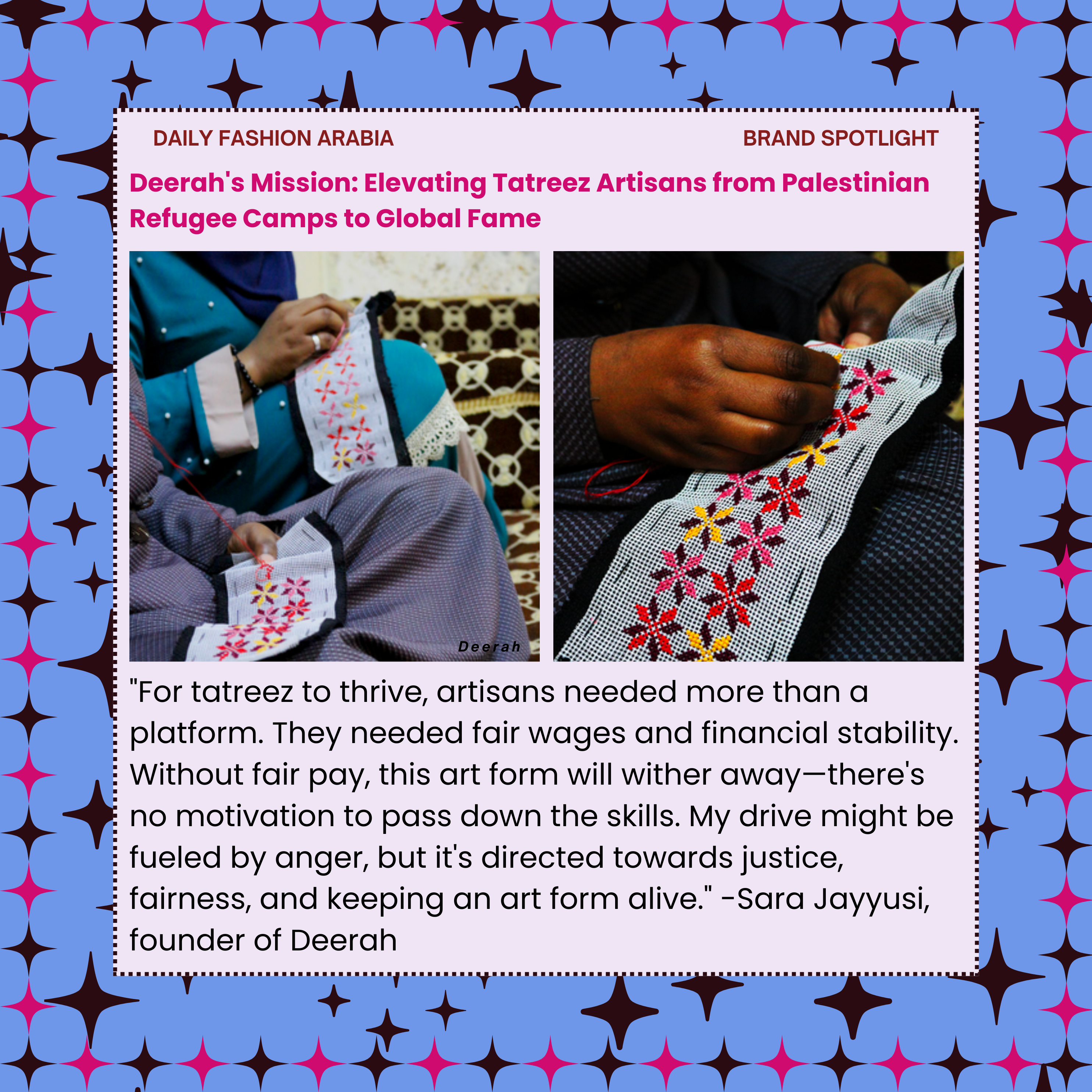
As Deerah grew, Sara felt compelled to meet the artisans behind the work. She had been working through an intermediary, but she wanted to understand the process and the lives of the embroiderers themselves.
People warned her about the conditions inside the Palestinian refugee camps in Jordan, but she chose to go anyway. What she found transformed her mission.
“The conditions were horrendous. Worse than the Syrian camps I had visited,” she said. “Yet inside these small homes, tatreez was still alive.”
She also discovered that many women were producing embroidery for luxury brands sold in high end stores, yet they were paid almost nothing.
“If we do not pay these women fairly, the art will disappear. They will stop teaching it. They will stop caring about it. There is no motivation to continue if they cannot survive,” Jayyusi said.
Her frustration became a turning point. She restructured Deerah so that artisans would receive fair pay and recognition for their work. The change quickly affected families. One embroiderer's daughter, who is studying architecture, decided to take on a tatreez project because it finally provided a fair income.
“She saw real value in it, both cultural and financial,” Jayyusi said.
Deerah is not only preserving an art form. It is restoring dignity and opportunity for women whose skills have long been overlooked.
Elevating Tatreez: Deerah’s Mission to Rebrand Palestinian Embroidery as High Fashion
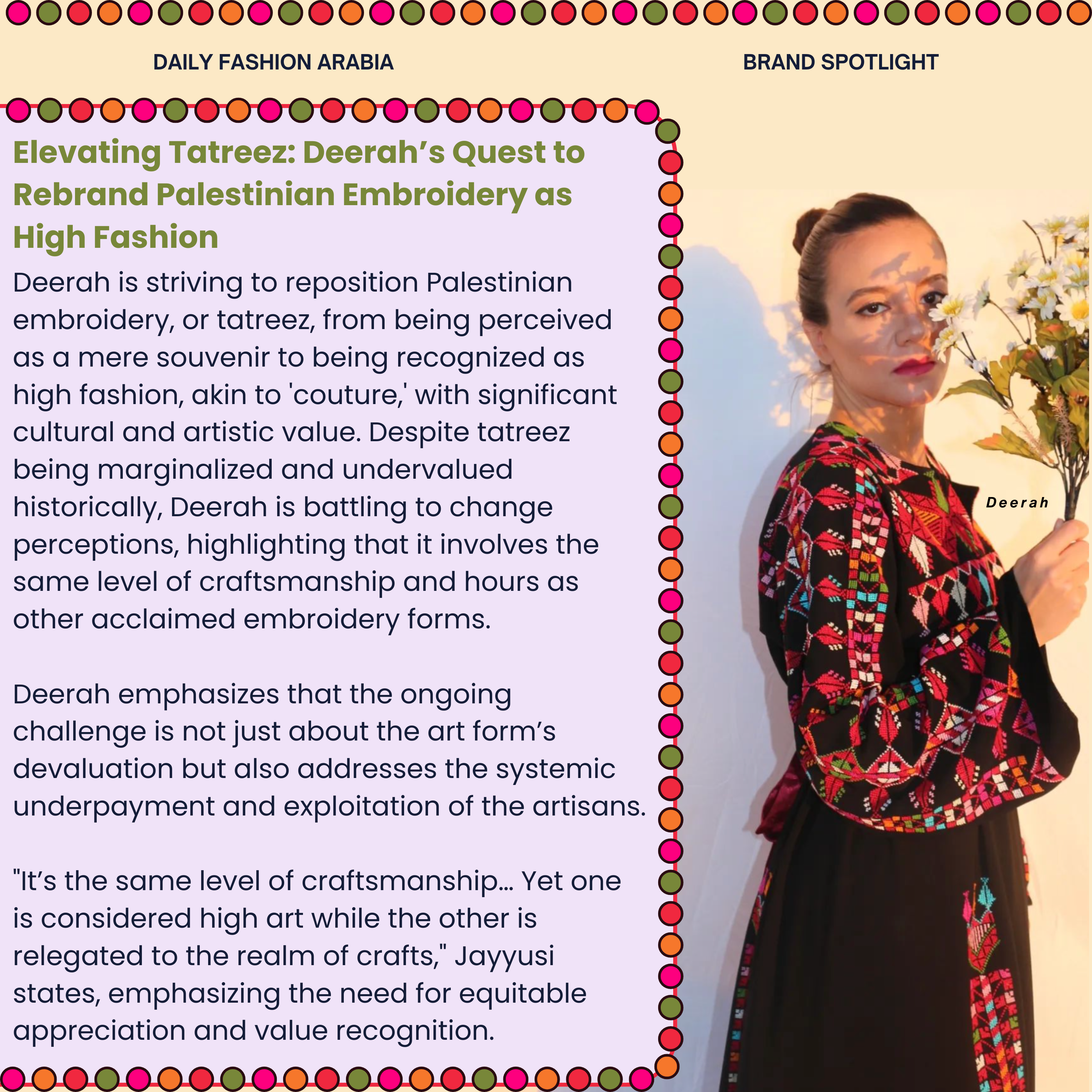
Tatreez has often been dismissed as a simple craft or souvenir instead of an art form. Jayyusi believes it deserves the same respect given to couture embroidery.
“The level of skill and hours in tatreez equal any couture piece. Yet one is treated as high art and the other as casual craft. It is time to correct this,” she said.
The challenge is not only financial. It is rooted in decades of undervaluing Palestinian labor and culture. Still, she sees the beginnings of change.
“There are people who understand the meaning behind tatreez and are willing to pay for the real value of this work,” she said.
For Jayyusi, education is as important as sales.
“We want people to value tatreez the same way they value embroidery in Paris. These pieces hold history, identity and incredible craftsmanship,” she said.
As consumers move toward more ethical and meaningful purchases, Deerah’s message feels increasingly relevant.
Challenging the Status Quo: Putting Palestinian Craftsmanship on the Global Fashion Map
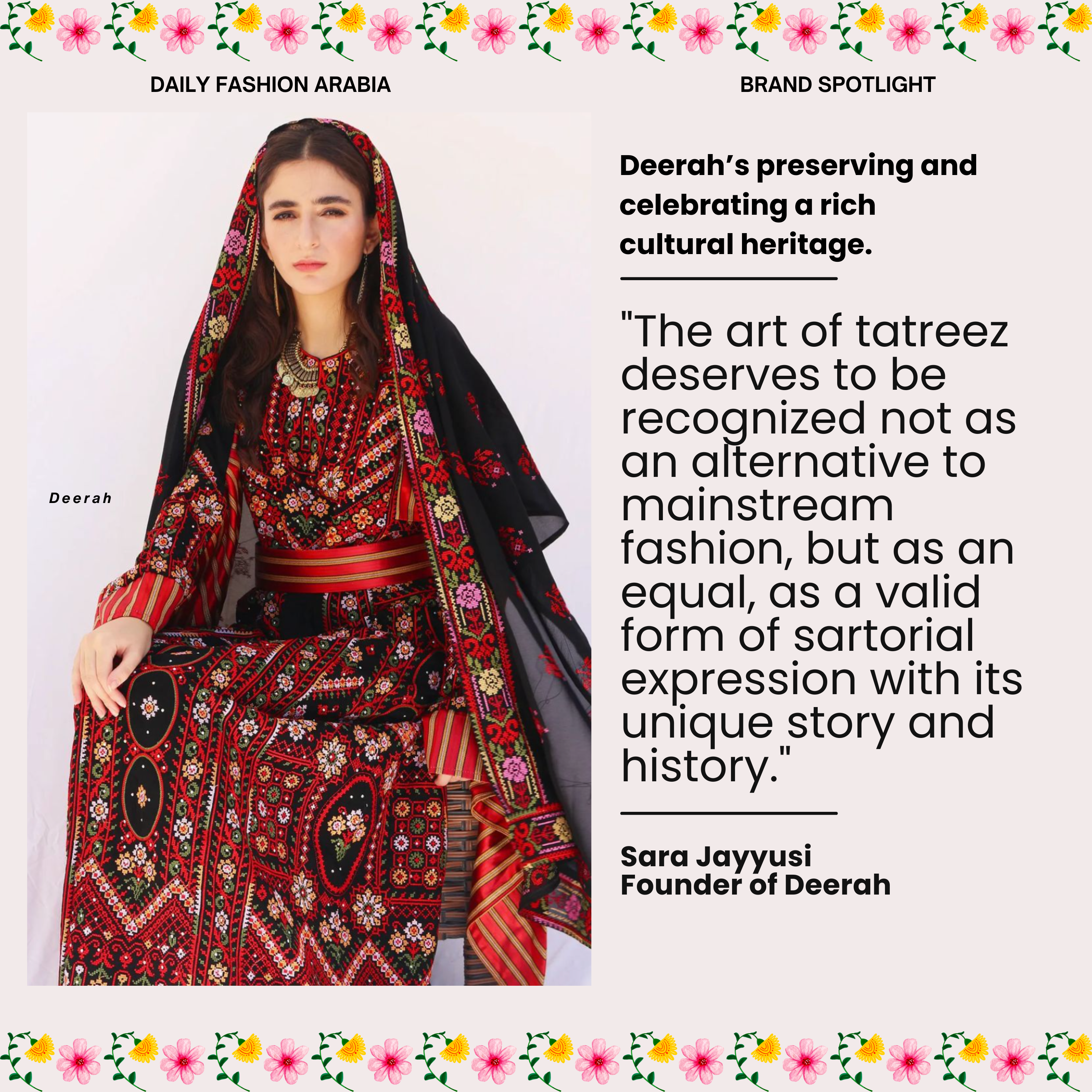
“People buy what matches the identity they want to express,” Jayyusi says. “When they see a Palestinian woman looking confident and beautiful in a thobe, it creates an emotional connection.”
Strong photography and thoughtful styling help shift perceptions. They allow people to see tatreez as aspirational, not old fashioned.
“We should be the ones telling our own stories and benefiting from our heritage. We do not need big brands to define the value of our craft,” she says.
For Jayyusi, Deerah is both preservation and empowerment. It challenges the world to see Palestinian craftsmanship with the respect it deserves.
The Craft of Intentionality: How Deerah Balances Heritage and Accessibility
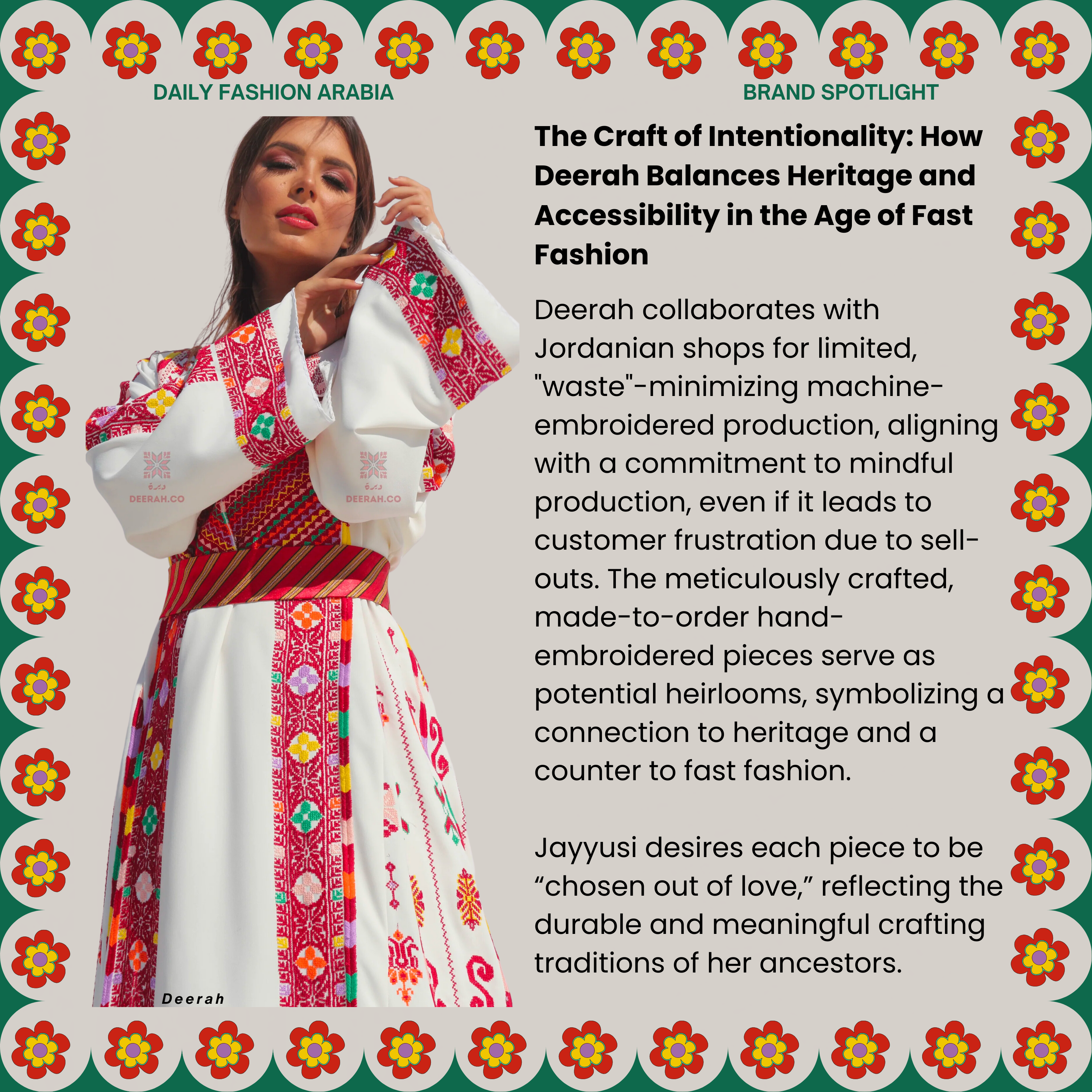
Deerah offers both machine embroidered and hand embroidered items. This model exists for both ethical and practical reasons.
“Hand embroidery requires higher prices to support fair wages. We also want people who cannot afford luxury pieces to still experience tatreez,” Jayyusi explains.
Machine embroidered pieces are produced in very small batches through Jordanian shops. No design exceeds eight pieces. This approach reduces waste and keeps production mindful.
Made to order hand embroidered pieces follow traditional Palestinian practices. Materials are sourced only after an order is placed and everything is made to the client’s measurements. These garments are built to last and often become heirloom pieces.
“Our ancestors created clothing that was durable and meaningful. Today people buy things out of emptiness or to follow trends. I want our garments to be chosen out of love and connection to heritage,” she says.
Reclaiming Authentic Palestinian Heritage for the Eco Conscious Generation
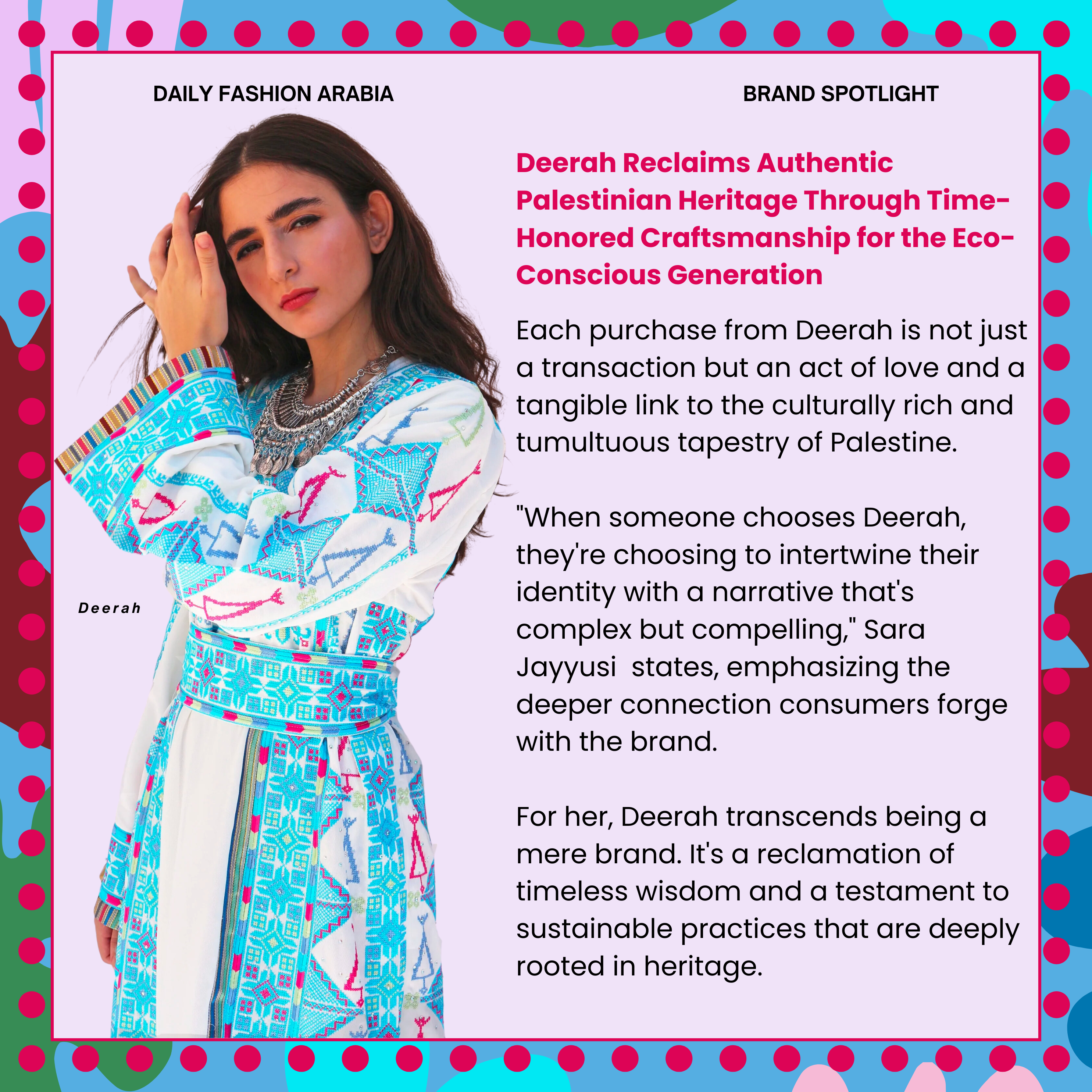
For Jayyusi, each Deerah purchase is a love letter to Palestine. It connects the buyer to a land with deep pride and deep wounds.
She has also found that some of the most sustainable practices come from the past. One example is the traditional use of olive oil soap to clean embroidered garments. It is gentle, natural and effective.
“Sometimes the best solutions are the ones that have existed for generations,” she says.
For her, sustainability is not a trend. It is a return to forgotten wisdom and mindful living.
Enriching Tradition: How Deerah Balances Preservation and Evolution
Within the world of tatreez, there are two main approaches. One focuses on strict preservation of historical motifs. The other encourages innovation that keeps the art relevant today.
“I see value in both,” Jayyusi says. “We must document our history in detail. At the same time, evolution keeps the art alive.”
She credits scholars like Widad Kawar for building the foundation of documentation that allows designers to push the craft forward with respect and understanding.
“It is not about replacing tradition. It is about enriching it,” she says
Tatreez as a Language That Never Stops Evolving
Tatreez has always evolved through cultural exchange. Jayyusi shares examples of techniques that traveled across communities, cities and generations.
The couching stitch used in Bethlehem arrived through visiting Roman Popes, then spread to Jerusalem and Yaffa through Christian communities. Women shared techniques through marriage and migration, and after 1948 many styles blended naturally inside refugee camps where materials were limited but creativity was abundant.
“Tatreez was never static. It always grew and adapted,” Jayyusi says. “We want to honor that complexity.”
If Sara Could Start a Global Trend
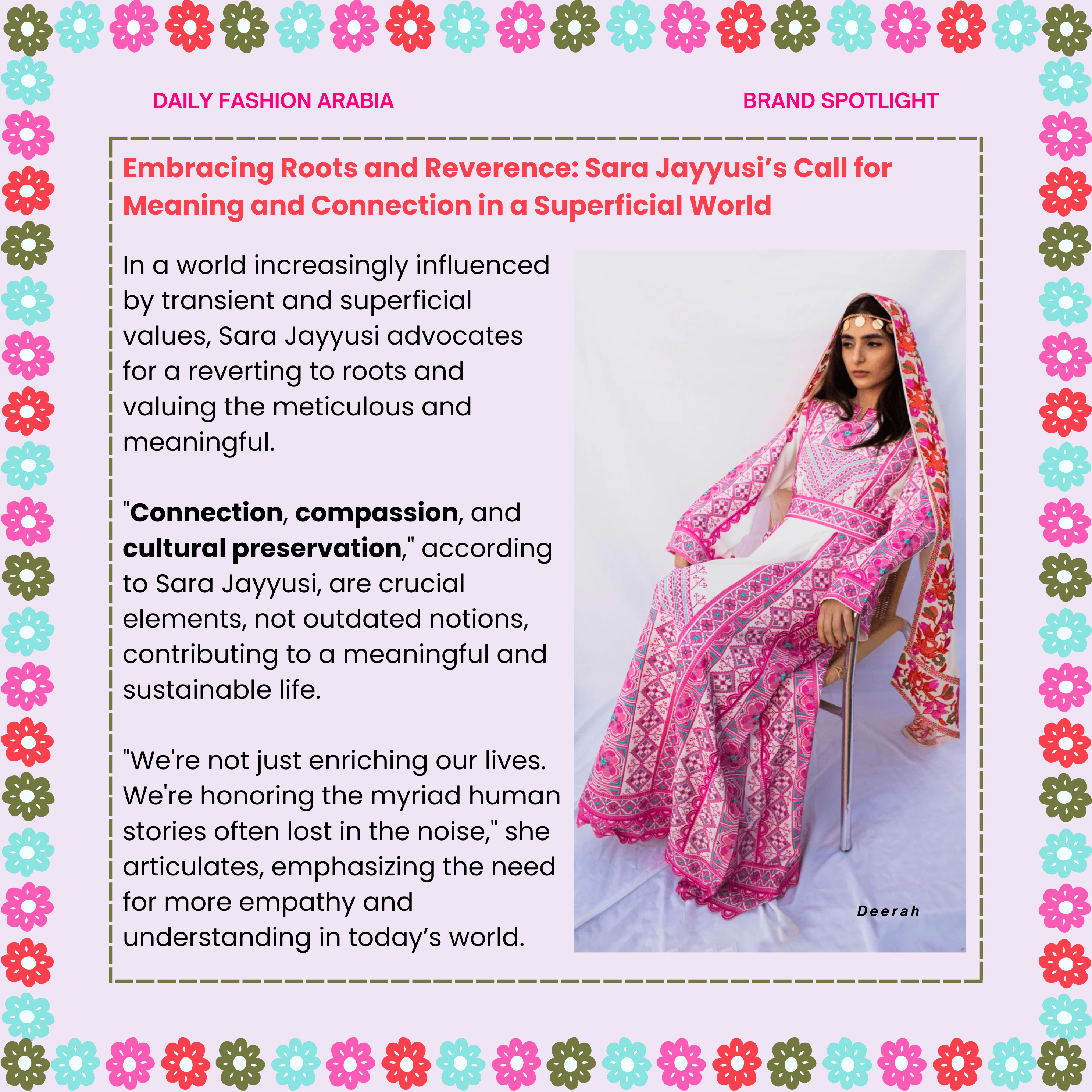
If Jayyusi could inspire one global trend, it would be simple. “Spend a day with the person who created your garment.”
She believes that understanding the maker changes everything about how we consume. It builds empathy and helps people see clothing as cultural storytelling, not disposable fashion.
“For Palestinians, sharing our stories is also resistance against erasure. Every stitch carries meaning,” she says.
A Closing Reflection
In a world shaped by fast fashion and instant gratification, Sara Jayyusi’s philosophy invites us to slow down. She reminds us that every thread and every stitch holds a story worth understanding.
Her message is clear. When we choose connection, cultural awareness and compassion, we honor the people behind the craft. We also enrich our own lives.
This is the heart of Deerah. A celebration of heritage, dignity and the human stories woven into every piece.
In a world shaped by fast fashion and instant gratification, Sara Jayyusi’s philosophy invites us to slow down and reconnect with meaning. She reminds us that every thread and every stitch carries a story worth understanding. Her message is simple. When we choose awareness, connection and compassion, we honor the artisans behind the craft and enrich our own lives. Deerah stands as a celebration of heritage, dignity and the human stories woven into every piece.
Don’t miss out on the latest updates and designs from Deerah.co and the online store.